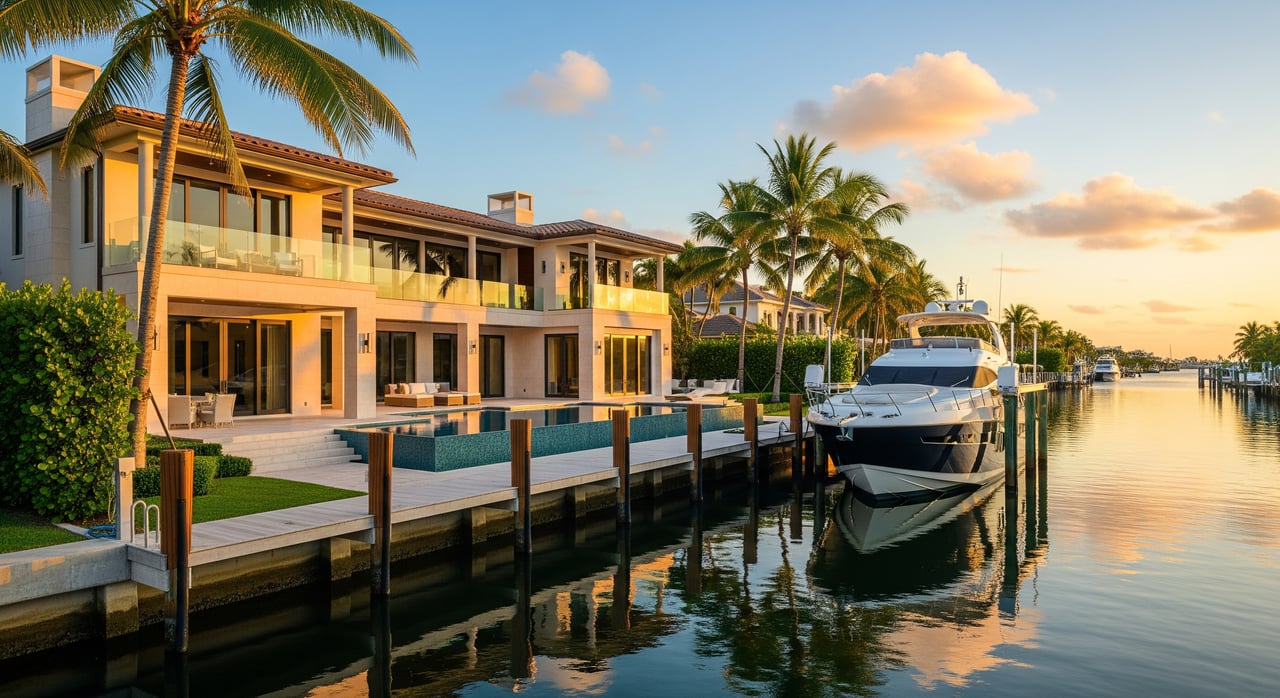
Thinking about a Las Olas Isles waterfront but not sure whether deepwater or ocean-access will better fit your boat and lifestyle? You are not alone. In these canals, small differences in depth, bridge clearance, or turning room can change daily convenience and long-term resale. This guide clarifies what matters most so you can match the right dock to your vessel and your plans. Let’s dive in.
Deepwater vs ocean-access in Las Olas Isles
Deepwater refers to a dock or canal that has enough water at mean low water to float your boat’s draft with a safety margin. It is about under-keel clearance, not just a high-tide snapshot. Always verify the depth in front of the specific property at mean low water and compare it to your boat’s draft plus a buffer for squat and sedimentation.
Ocean-access means you can reach the ocean without hitting a fixed bridge that your boat cannot pass under. It does not always mean zero bridges. Many routes still include drawbridges that open on signal. The key is whether your boat’s air draft can clear the route based on posted bridge heights at the stated tide level.
Local navigation snapshot
Las Olas Isles connects to the Intracoastal Waterway near central Fort Lauderdale, with offshore access commonly via Port Everglades. Canal depth and width vary block to block. Some streets accommodate larger sportfishing boats and express cruisers, while others are best for low-draft center consoles. Bridge operations and clearances are regulated by the U.S. Coast Guard and local jurisdictions, so verify details for your exact route before committing.
How waterway features limit boat size
Depth vs draft
Start with your boat’s draft. Compare it to documented depth at the dock at mean low water. Add a safety margin for squat, seasonal sediment, and occasional low tides. If there is no recent depth survey for the property, plan to commission one.
Air draft and fixed bridges
Air draft is your vessel’s height from the waterline to the tallest point. A fixed bridge’s posted vertical clearance sets the limit. Tall masts or radar arches often become the deciding factor. Drawbridges can open for passage, but fixed bridges cannot. Confirm the tide reference used for posted clearances so you are comparing apples to apples.
Turning basins and channel width
Even with enough depth, you still need room to maneuver. Long or wide boats require space to spin or back in safely. Limited turning room can make arrivals tide or wind dependent. If you are near the limit, discuss the approach with a local marina or harbor master and consider a marine surveyor’s opinion.
Slip length, beam, and utilities
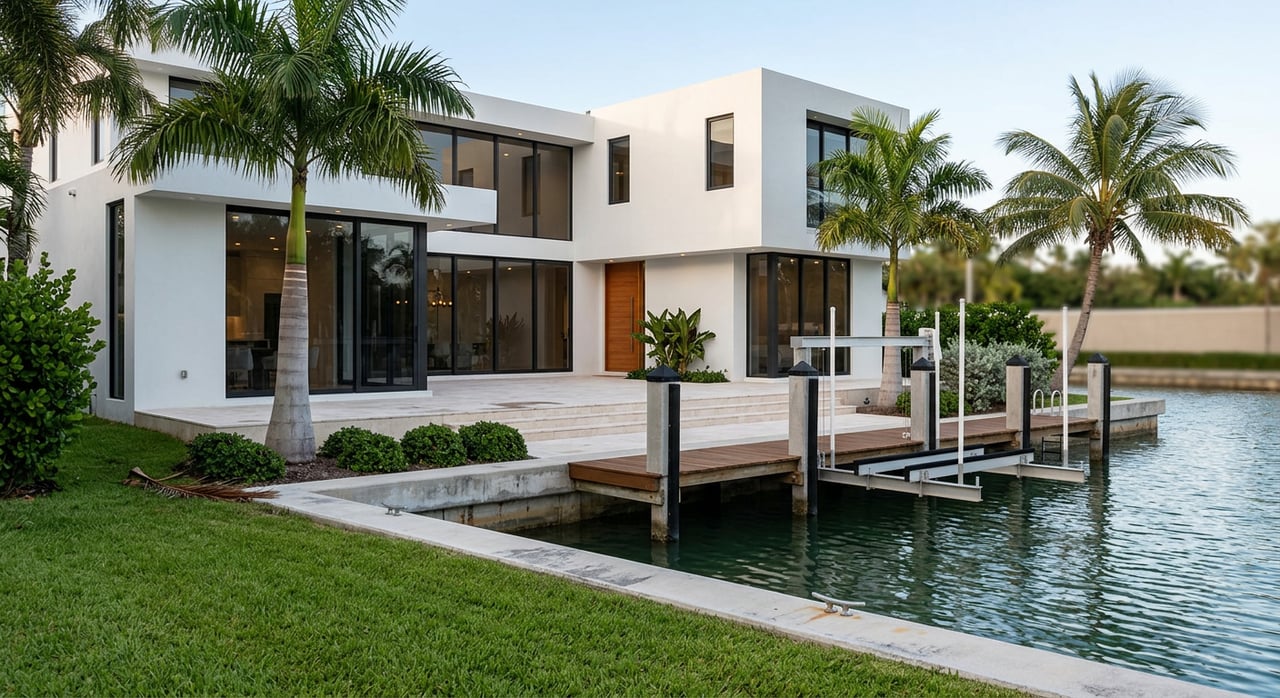
Your slip or dock must fit the boat’s length overall with margin for fenders and lines. Beam should fit piling spacing. Larger boats may need 50A or 100A shore power, reliable freshwater, and pump-out access. Not every private dock offers marina-grade utilities, so confirm electrical and hardware specifications.
What day-to-day life feels like
Deepwater with unobstructed ocean access
If your route has adequate depth and no impassable fixed bridges, you get simple departures and a wider range of boat options. Frequent anglers and cruisers value the convenience, especially when schedules depend on weather windows or early offshore starts. You still plan around drawbridge openings if present, but the overall routine is straightforward.
Ocean-access that includes drawbridges
Drawbridges usually open on signal, yet they add timing and traffic to your run. If your boating is mostly weekend cruising, this may be a small tradeoff. For daily offshore fishing or tight departure windows, the added coordination can matter.
Fixed-bridge or shallow canals
These properties can be ideal for smaller center consoles or flats boats. They often come at a lower entry price than prime deepwater. The tradeoff is a narrower future buyer pool and more careful seamanship in narrow fairways, especially on windy or busy days.
Value, insurance, and resale implications
Homes with verified deepwater dockage and unobstructed ocean access typically attract a broader buyer pool, including larger powerboats and some yachts. That wider demand can translate into stronger pricing and easier resale. Properties constrained by shallow depth or low fixed bridges appeal to smaller, low-draft boats, which narrows the audience.
Insurance and financing can also vary. Carriers and lenders look at seawall condition, pilings, exposure to storm surge, and flood zone. They may request documentation of dock construction, recorded easements, and utility specifications. Confirm these early to avoid surprises.
Maintenance costs matter. Seawalls and pilings age and may require substantial investment. Some canals are municipally maintained, while others are private, which can lead to special assessments for dredging. Dock power, water, and pump-out systems also have upkeep requirements.
Who benefits from each option
- Offshore anglers and long-range cruisers: Deepwater, unobstructed routes, reliable turning basins, and strong shore power are top priorities.
- Weekend boaters and small-craft owners: Shallow or fixed-bridge canals can offer value, provided you confirm safe low-tide departures.
- Sailors with tall masts: Air draft often drives the search. Focus on routes without low fixed bridges and verify drawbridge operations.
Due diligence checklist for Las Olas Isles waterfront
- Gather boat specs: length overall, beam, draft, and air draft.
- Request a recent depth survey at the dock referenced to mean low water. If the seller does not have one, plan to commission a survey.
- Verify bridge clearances along your path to the ocean. Confirm the tide datum used for posted heights and any operating schedules or restrictions.
- Review recorded easements, riparian rights, and any HOA or deed rules that affect boat size, dock use, or overnighting.
- Inspect seawall and pilings. Document age, materials, and any upgrades. Consider a marine contractor’s structural assessment.
- Check dredging history and maintenance responsibilities. Confirm whether the canal is city or privately maintained and whether assessments have occurred.
- Confirm shore utilities: shore power amperage, water supply, and sewage pump-out access.
- Review flood zone and elevation, then get preliminary insurance quotes for both home and hull to frame your cost of ownership.
- Speak with local harbor or marina personnel about maneuvering, winds, currents, and traffic at the canal mouth.
- Engage a marine surveyor and a real estate attorney to verify dock suitability and recorded rights.
Documents to request from a seller
- Depth survey at the dock referenced to mean low water, preferably within the past 1 to 3 years.
- Permit history for docks, pilings, seawalls, and any dredging.
- HOA covenants, recorded dock or harbor easements, and any riparian agreements.
- Photos that show low-tide conditions at the dock and details of shore power and utilities.
- Records of assessments related to dredging or seawall repairs.
Smart budgeting for maintenance
Dredging and assessments
Understand who maintains your canal and how costs are shared. Private responsibility can mean periodic dredging assessments. A clear record of maintenance can also support resale.
Seawalls, pilings, and utilities
Seawall condition and piling integrity have a direct impact on safety, insurability, and future repair budgets. Shore power and water lines should meet code and be appropriately sized for your boat.
Insurance and flood considerations
Flood zone, elevation, and exposure influence premiums. Insurers will often request documentation related to dock construction, seawalls, and wind or surge mitigation. Get quotes early and incorporate them into your purchase decision.
Matching boats to docks: simple scenarios
- Center consoles and flats boats: Generally fit most canals with modest depth and low air draft requirements. Verify MLW depth to avoid grounding at low tide.
- Express cruisers and sportfishers: Need deeper canals and adequate turning room. Confirm shore power capacity if you plan to keep systems running at dock.
- Large yachts and sailboats: Require deepwater dockage and routes without low fixed bridges. Some very large vessels may be better served by a marina with a large turning basin.
Next steps
Choosing between deepwater and ocean-access in Las Olas Isles comes down to matching your vessel’s draft and air draft to the specific canal, bridge route, and turning room. Documented depth, clear bridge data, and strong seawall and piling records will protect both your day-to-day boating and your resale value.
If you are weighing options or want a second opinion on a specific property, the GK Group can help you evaluate depth surveys, bridge routes, and maintenance records, then map those details to your lifestyle and boat. Request a confidential luxury market consultation.
FAQs
What does “deepwater” mean for Las Olas Isles buyers?
- Deepwater means enough depth at mean low water to clear your boat’s draft with a safety margin; always verify with a recent depth survey.
How do fixed bridges affect ocean access from my dock?
- A fixed bridge’s vertical clearance limits your boat’s air draft; if your boat is taller than the posted height at the stated tide, the route will not work without an alternate path.
Why is a turning basin important near my dock?
- Limited turning room can make docking risky or tide and wind dependent; larger boats may need a nearby basin or marina assistance.
Who is responsible for canal dredging in Las Olas Isles?
- It varies by canal; review city or county records and recorded documents to see if maintenance is municipal or private and whether assessments have been levied.
What insurance documents should I prepare for a waterfront home?
- Insurers often ask for dock and seawall condition details, piling specs, and flood information; get quotes early based on real documentation.
Are shallow or fixed-bridge canals harder to resell?
- They can be, since the buyer pool is limited to smaller, low-draft boats; verified deepwater and unobstructed access typically attract more buyers.